

Guilt After Mother’s Passing
April 22, 2026
Together Again: “Live Your Best Life”
May 15, 2026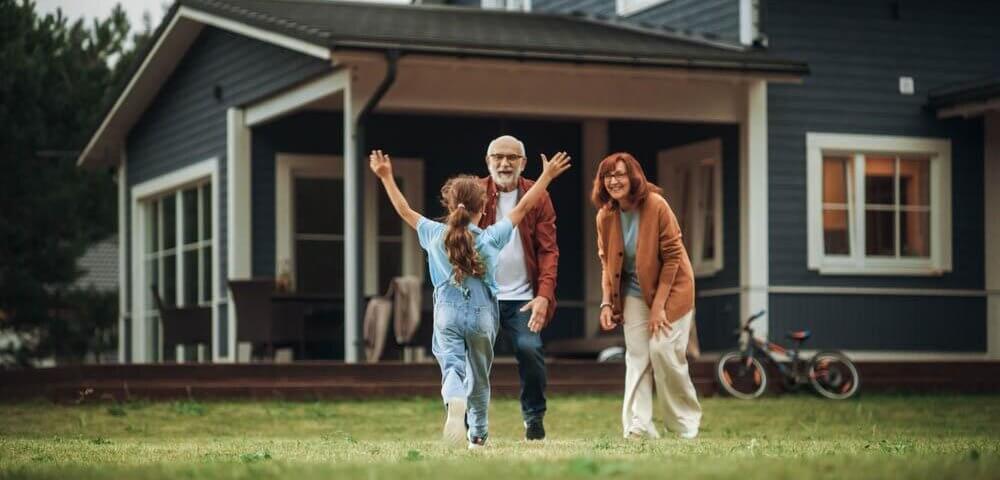
Share This Article




The Powerful Gift of Loving Grandparents
Mental health professionals often note that children thrive when they have at least one loving, dependable adult in their lives. Grandparents are not simply extra help—they can be powerful protective factors. The following shares how important this relationship can be.
From Psychology Today
The psychological power of an involved
grandparent — Shared by a Mental Health NP
People call grandparents “extra help.”
They’re not extra. They’re protective factors.
When a child has more than one safe, emotionally available adult, their nervous system doesn’t just feel comforted, it develops differently.
Research in developmental psychology shows that consistent, nurturing relationships with multiple caregivers help regulate the stress response system.
That means:
- stronger emotional control
- reduced anxiety risk
- healthier attachment patterns
- increased long-term resilience
This isn’t nostalgia.
It’s neuroscience.
Roughly 1 in 5 children in the U.S. lives in a multigenerational household. Millions of grandparents serve as primary or supplemental caregivers.
Decades of child development research confirm that stable adult relationships are one of the most powerful buffers against toxic stress.
And here’s what parents experience firsthand:
When grandparents support parents, parental stress decreases. When parental stress decreases, children exhibit fewer emotional and behavioral struggles.
So when someone says:
“They’re too attached.”
“They’re over there all the time.”
“You need to be more independent.”
What they’re actually witnessing is:
Expanded security.
Another regulated adult nervous system.
Another safe place to land.
Another voice reinforcing, “You’re okay.”
Children don’t just grow from love.
They grow from shared stability.
If your child has a grandparent who consistently shows up, that relationship isn’t a bonus. It’s building lifelong mental health.
"With appreciation for the grandparents who
help children grow in resilience,
emotional security, confidence, and the lasting
knowledge that they are deeply loved."
— griefHaven
griefHaven.org
1112 Montana Avenue. Ste. 701
Santa Monica, CA 90403
(310) 459-1789 ∞ hope@griefHaven.org
For permission to use this article, please
contact hope@griefHaven.org