

Why Do I Feel So Guilty
September 22, 2022
Stewarding Children’s Grief
September 23, 2022
Share This Article




You Don't Need Closure
No, You Don't Need Closure
– By Dr. Stephen J. Forman

As a cancer doctor, I see death, and I see how the loss of a loved one is a part of each person's life forever. There are few among us who have not experienced the loss of a friend or loved one. Often it comes without warning, like in an accident. The experience of loss after a lingering illness like cancer, though more expected, is just as deeply felt.
As time passes, we often hear how important it is to gain closure—a way of tidying up to help us move on with our own lives.
The reality is that
closure is a myth.
My personal and professional experience with those who have lost friends and family, including children, has taught me that going on with life is not the same as gaining closure. The wound of loss is a part of each person's life forever. We continue to think about those dear to us, though perhaps not
every day or with the same intensity. Recollection is sometimes provoked by a date on the calendar or, less predictably, by a sight, sound, aroma, melody or place that evokes the missing person. These personal moments, seemingly forever paused in time, can cause us to feel alone, especially during sentiment-filled holidays.
The danger of the idea of closure
is that it heightens this aloneness
by giving us a false expectation
that these experiences should
and will at some point end.
They won't.
No matter how much time has passed, memories remain. To deny them is to deny precious moments of love, fellowship, gratitude and inspiration. Grieving changes the experience of loss, but does not eliminate it, and is not intended to do so. To close the memory does not sustain the healing or help in proceeding with life. Such echoes from the past are voices in the present and are sometimes warmly felt.
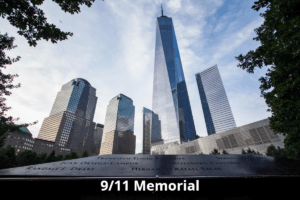
As humans we all yearn to remember. Nearly every culture has its way of preserving the past. We build memorials to perpetuate collective memory, whether it is the Vietnam Memorial or Holocaust Museum in Washington, D.C., the field of empty chairs in Oklahoma City, or the 9/11 Memorial in New York. Cemeteries offer a communal "safe space" where grief is openly welcomed and expected, forever. Visitation rights to a plot do not suddenly expire six months after a burial, a time that some in the medical community suggest is the "normal" grieving period. In the Jewish tradition, the acknowledgment of the annual yahrzeit, the anniversary of the death of a family member, is always done in the presence of others, provoking a collective memory of the person. These occasions--sometimes formal, but more often spontaneous--are not about closure. Rather they are about the fullness in each of our lives that came from our family, loved ones and friends, as well as others who were touched by that person's presence.
In my work as a cancer physician, months after a death, I often write to the family of a loved one who was under our care. It is a time when most of the people who helped support them through the days and weeks immediately after have gone back to the busyness of their own lives.
Grieving changes the experience
of loss, but does not eliminate it,
and is not intended to do so.
The bereaved are left alone with their own feelings and thoughts. My letters are a chance to remain connected, but also a way to convey that their loved one is an important memory for me, too. These words of acknowledgment are always welcome, reassuring those whose lives have become interwoven with ours that their loved ones are alive within us, as they are in their own families.
A few months ago I ran into a woman who, many years earlier, had, at a very young age and early in her marriage, lost her husband to cancer. Since then she had moved away, met another man whom she adored, married him and had a family. Together they raised their children. She had built a successful career. Seemingly she had found "closure" from the tragedy of her early life. As we finished talking and she began to walk away, she turned around, and with eyes full of tears said: "I think of him almost every day."
About Dr. Forman
“We come to work every day thinking ‘cure ....’ Once we've extended our hand and grabbed yours, we don't let it go.” Dr. Stephen J. Forman
Stephen J. Forman, M.D., is an international expert in leukemia, lymphoma, and bone marrow transplantation. He is co-editor of the "Thomas’ Hematopoietic Cell Transplantation," a definitive textbook for clinicians, scientists, and health care professionals.
Dr. Forman exudes the special blend of zealous determination and compassion. In nearly 40 years at City of Hope, Dr. Forman has been instrumental in dramatically advancing survival rates for blood disorders. He is deeply involved with the translational and clinical research at City of Hope's Toni Stephenson Lymphoma Center, Cellular Immunotherapy Center, Judy and Bernard Briskin Center for Multiple Myeloma Research, and the Gehr Family Center for Leukemia Research.
Does Suffering Teach?
From Healing After Loss by Martha Hickman

I do not believe that sheer suffering teaches. If suffering alone taught, all the world would be wise, since everyone suffers. To suffering must be added mourning, understanding, patience, love, openness, and the willingness to remain vulnerable. Anne Morrow Lindbergh
We know this journey well—the struggle to learn from our life experiences. We are understandably wary. The suggestion that hidden in this grief is some redeeming feature—such as that we might "learn something"—is an offense to us. It is as though we are supposed not to mind so much that our hearts are broken.
But after a time, if we are fortunate and if we work at it, we begin to see that we are, in fact, stronger, more mature. This is hard work and often every impulse in our psyche fights against it, because to learn from grief seems like sanctioning what has happened.
But we are, almost in spite of ourselves, feeling better. We have made the journey from a world that "was" into a world that "is," and as with all journeys, it has required commitment, initiative, adaptability, the willingness to give and receive help.
Action: As I walk this walk of recovery, I will take my time. I will be alert to the road signs. I will watch for other travelers of the way who may need my help, as I need theirs.
griefHaven * 310-459-1789 * hope@griefHaven.org
Copyright © 2022 griefHaven aka The Erika Whitmore Godwin Foundation.
All rights reserved.